 EN
 ES
Maybe you’ve seen it, maybe not: we have been working on a big project adding AI-powered features to our open source platform, with the objective to make digital participation even more efficient, meaningful and inclusive.
If you start working with our platform now, you will have some powerful LLM features at your disposal — with yet more features to be implemented in 2027! If you already use our platform, update you version to get access to these tools!
In this blog we list two LLM-powered features that are already implemented two that are work in progress.
#Implemented
1. Image suggestion tool
The image suggestion tool is now available for residents submitting a proposal to a Participatory Budget (PB) of their city. Some users find it cumbersome to look for an image that fits their PB proposal. Now, when a user clicks Add image, the platform gives the user two options: Choose image from a local folder, or Suggest an image with AI. When choosing the latter option, the configured LLM model (Mistral by default) does a quick web search and return 8 options to choose from. Note that this feature does not generate any images, it merely suggest rights-free images from the web.
Here’s how the tool works for a proposal on car-free streets.
Link pull request: https://github.com/consuldemocracy/consuldemocracy/pull/6190
2. Content translation tool
In certain places where Consul is used, local populations are linguistically diverse; some groups might not speak the dominant language. In order to improve inclusivity for these groups, Consul now packs a content translation tool. Consul already comes in different languages, but this feature only translates the permanent architecture of platform: menus, toolbars, admin panel, notification banners, etc. Content is left untranslated. The content translation tool finishes the job. When a user sets the platform to a certain language in which content anywhere on the platform is not translated, a small banner is displayed with the option to translate. A user clicks translate and within seconds, variable content is available in their language.
Here is an example translating the proposal above to Spanish:
#Work in progress
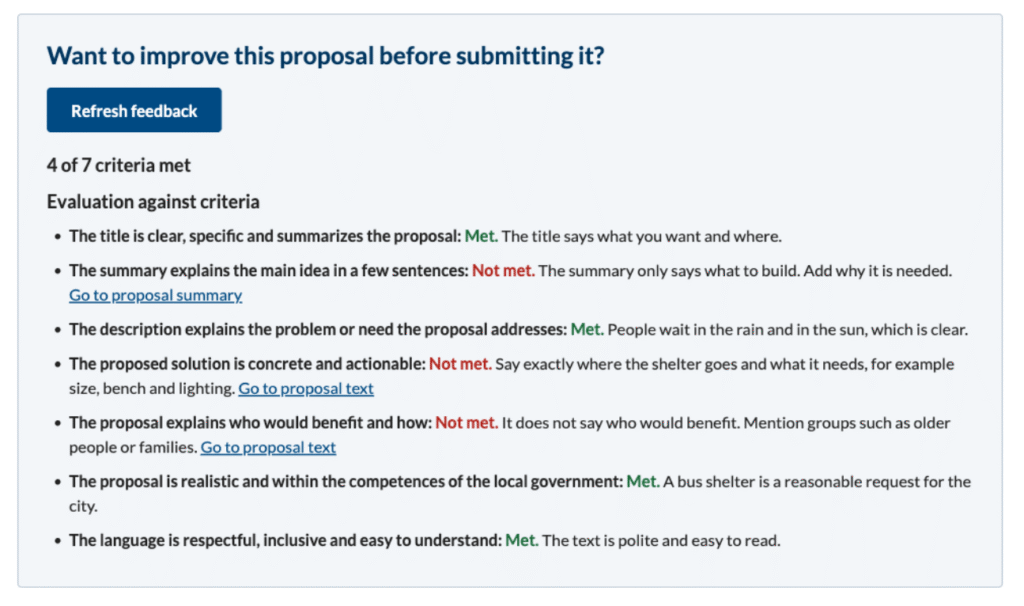
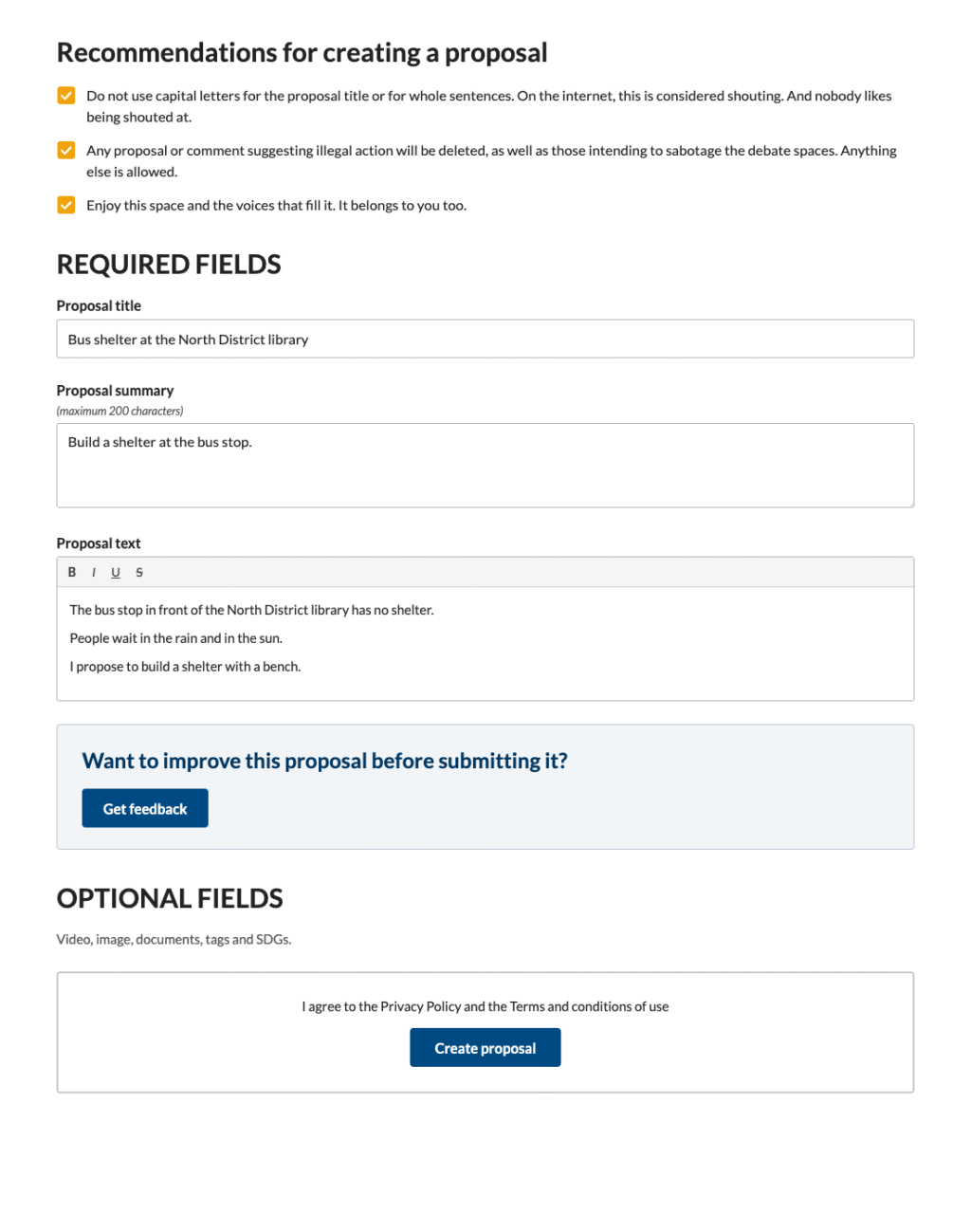
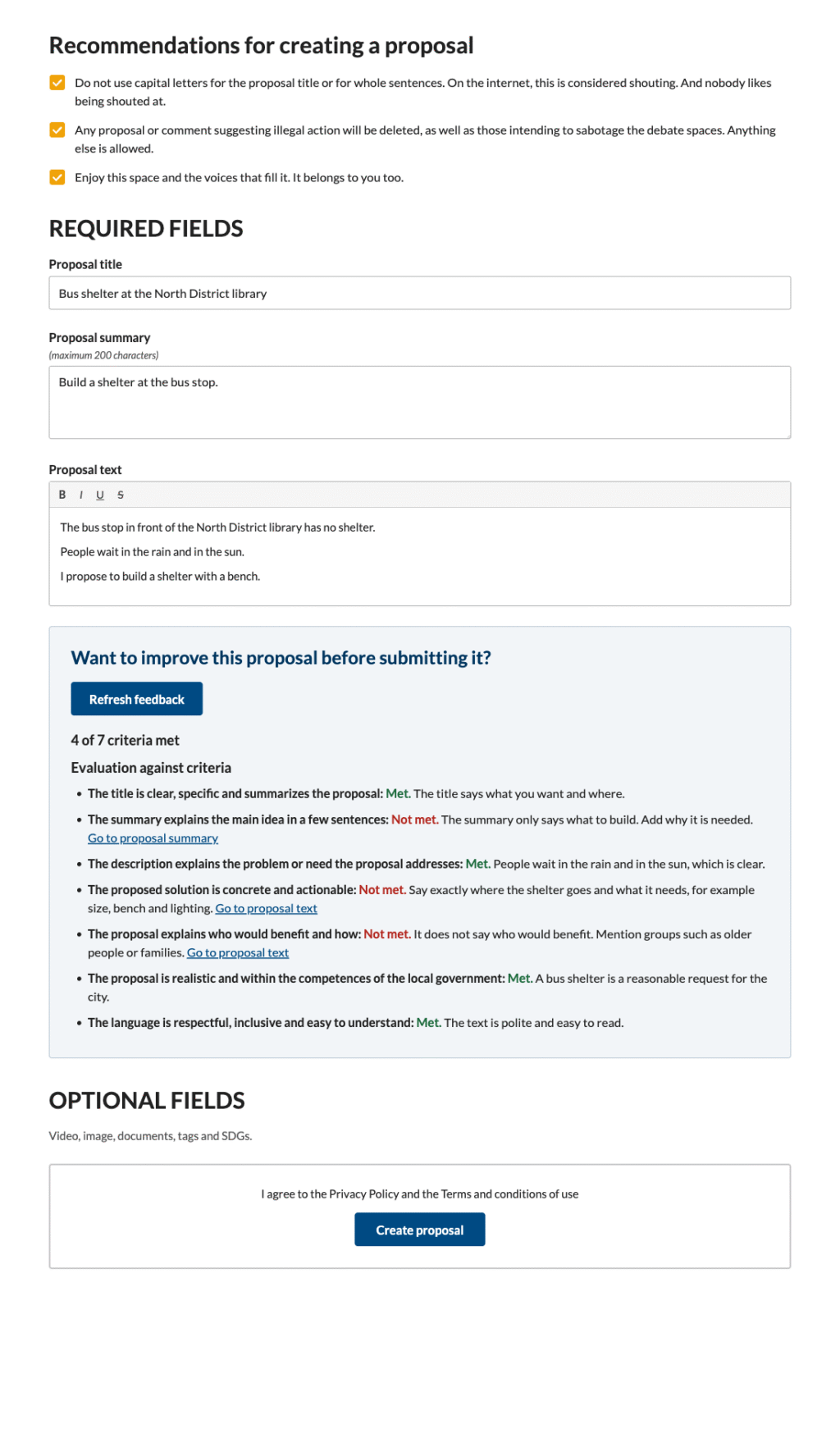
3. Proposal assisant
Not all citizen proposals are of similar quality. Some proposals might be not accepted or discarded by platform administrators not because they’re not good ideas, but simply because their submitters didn’t have time to spend on improving the messaging and presentation of their proposal. The Proposal assisant offers a quick check of citizen proposals against criteria that platform administrators set: consise title, clear messaging, actionable idea, word limit, and respectful language, for instance. This is what it could look like:
Link issue: https://github.com/consuldemocracy/consuldemocracy/issues/6571
4. LLM tagging and SDG suggestion
Tags exist to make life easier for both administrators and residents: it categorizes proposals into searchable thematic groups. But when lots of tags exist, it foregoes its purpose and only adds complexity. The same goes for the Sustainable Development Goals (SDGs) feature that is already present in the Consul platform. For some users a valued feature, but some residents who are less familiar with the SDGs, it might take a long time to figure them out, or choose one or two that matches their proposal. Now, with LLM tagging and SDG suggestion, a tool exists that suggest tags and SDGs based on a proposal’s body text and title. This is what it could look like:
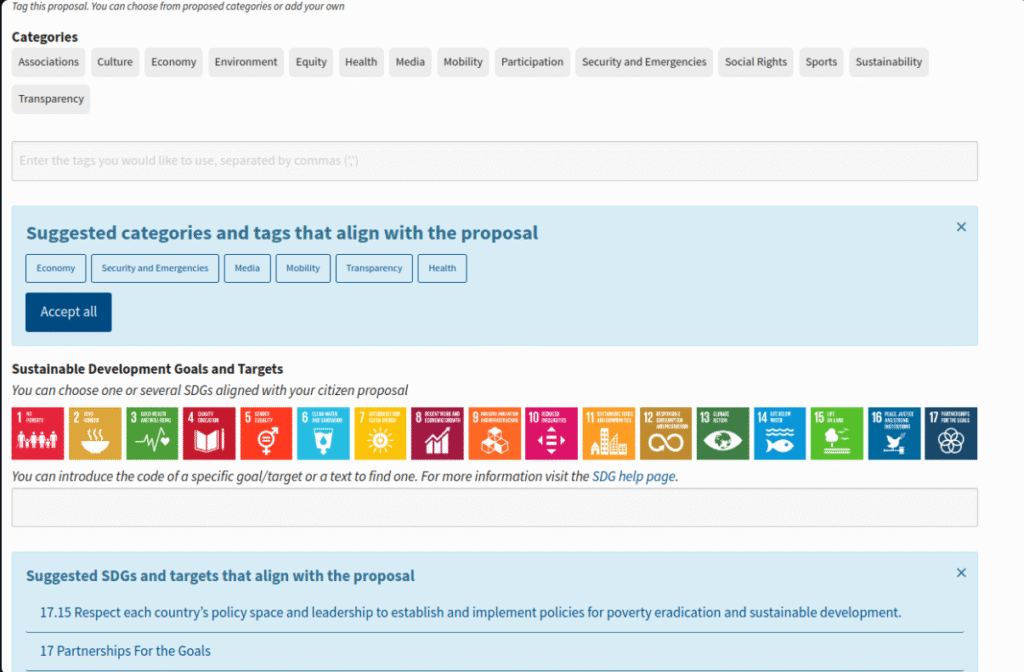
Link issue: https://github.com/consuldemocracy/consuldemocracy/issues/6569