 EN
EN  ES
ES 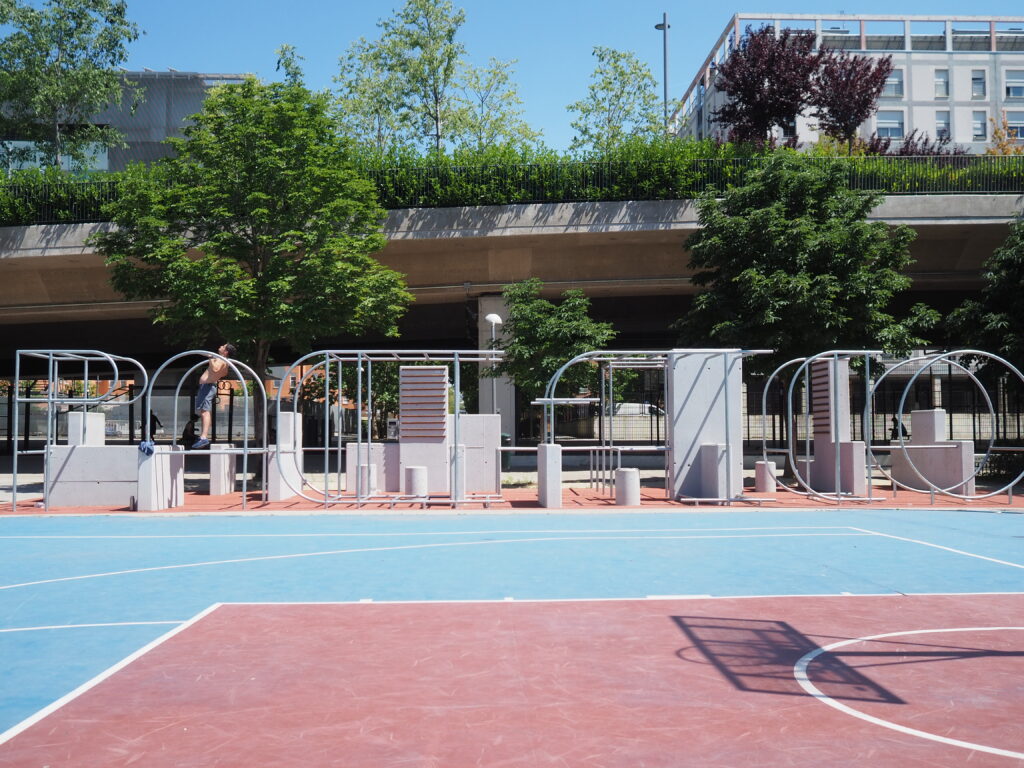
Made with Consul is about showing the real and tangible impact of digital citizen participation, supported by our free and open source participation platform. In each blog post we show in text and image the results of participatory processes run on CONSUL DEMOCRACY, and the impact these have had on cities, regions and the life of their residents. In the first blog we go back to where it all began: Madrid.
Ten, eleven years ago no madrileño knew what it is, a presupuesto participativo, or participatory budget. Now, when you walk the streets of Madrid and you mention the presupuesto participativo to a stranger, chances are that you at least get an answer like: “Something with money that you say something about, right?!” Pero ya va sonando, as they say in Spain: it is being talked about. It’s a process that keeps improving and gaining visibility.
Implemented projects
Madrid is currently (June 2026) in its eight cycle of participatory budgeting. Through the years, many projects got implemented by the administration. What are some of the examples of such successfully carried out projects? Can we illustrate, in other words, the impact of the presupuesto participativo on life in the city?
Project 1: Pedestrian and bicycle bridge over tunnel Dr Esquerdo
Calle del Doctor Esquerdo is a busy four-lane avenue in the Salamanca neighourhood, just west off the Madrid’s city center, that, heading north, runs down into a tunnel, passing the enormous Manuel Becerra roundabout underground. From where the cars dissappear in the dark under Manuel Becerra, which is infamously risky to cross, to where they reach street-level and the closest zebra-crossing, pedestrians have to cover roughly 400 meters. This artificial crease in the city’s skin has for long proved a effective separator of the barrios on each side of the tunnel: Goya in the East and Fuente del Berro in the West.
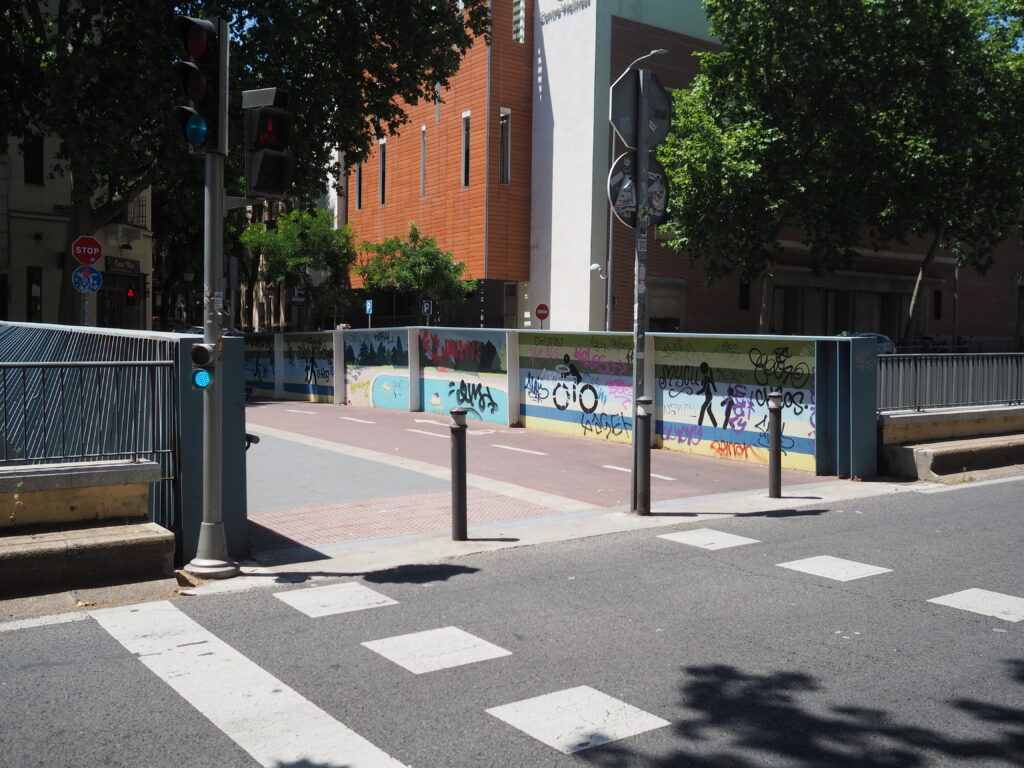
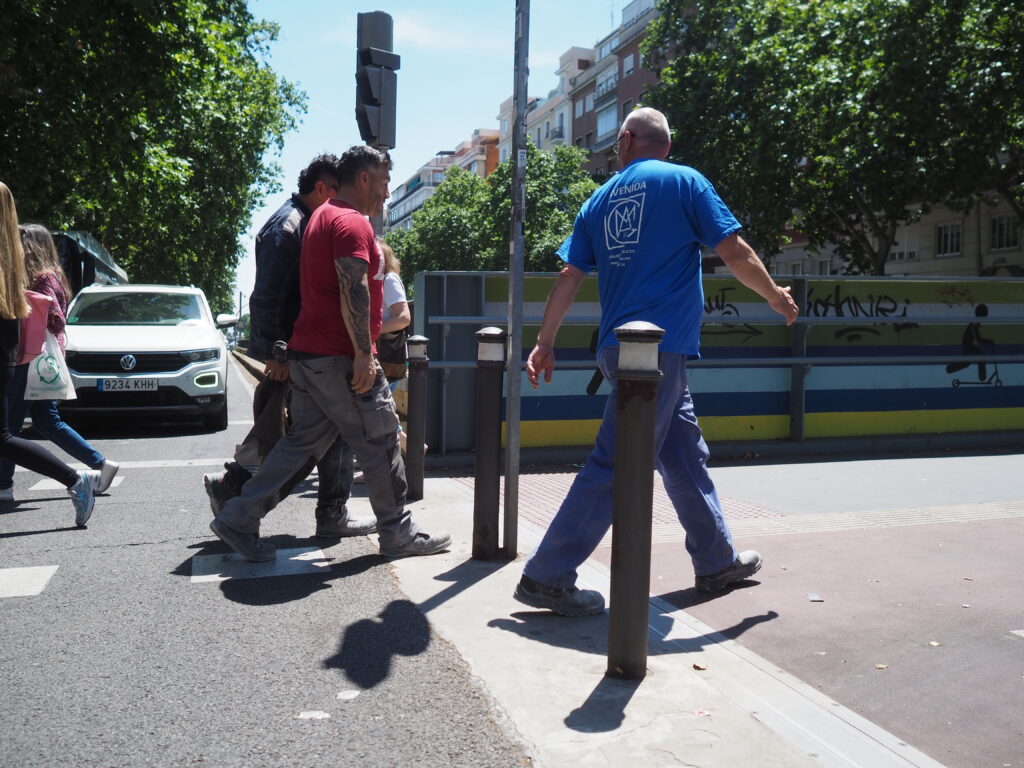
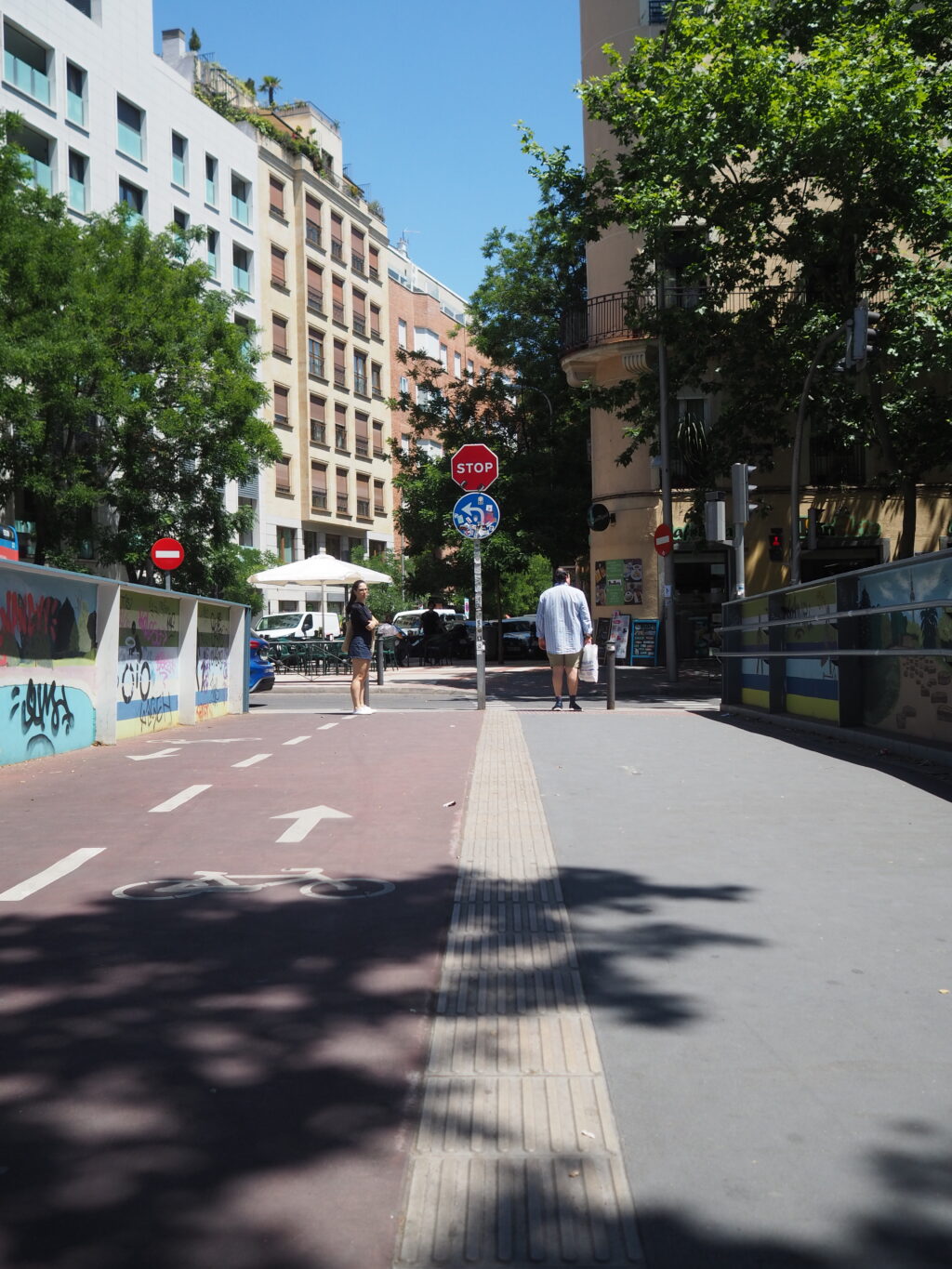
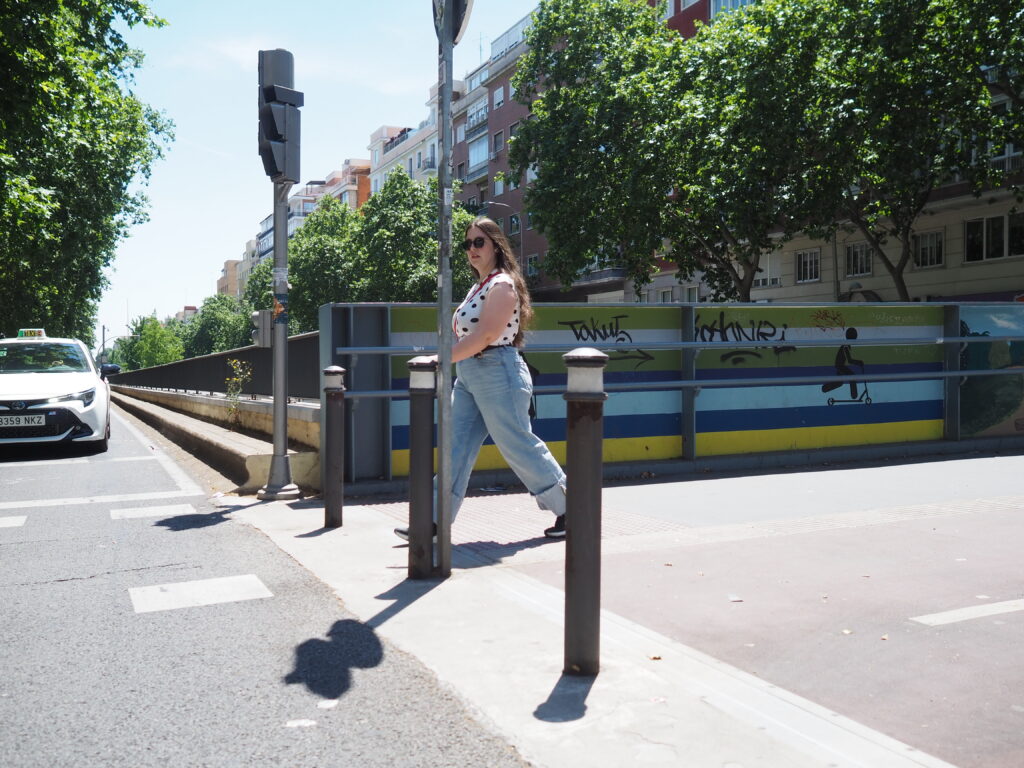
Pedro Jiménez, who participated in Madrid’s first ever participatory budget, saw a simple solution: a pasarela, a small bridge only for pedestrians and cyclists, connecting both sides of the avenue and providing a safe passage over the raging traffic down below. With such a bridge, it would not only make crossing the quasi-highway Dr. Esquerdo a safer endeavour, it would also glue together two neighbourhoods separated for years by a deep artificial gully in Madrid’s modern infrastructure.
Jiménez’s project was selected for implementation in 2017, winning over … votes in the final voting phase. From February 2016, when Jiménez initially proposed the project, to December 2018, it took the municipality almost three years to construct it. Nowadays, the pasarela is deeply embedded in the city’s infrastructure and used daily by thousands of madrileños on both sides of the isle called Calle de Doctor Rosqueda.
Project 2: Elevator from calle Sepulveda and calle Monsalupe
Tucked in between Parque de la Cuña Verde de la Latina to the south, and the forest-size Casa de Campo urban park to the north, the Los Cármenes neighbourhood feels miles away from the bustling streets of Madrid city center. Los Cármenes is calm and residential, relatively green, sometimes hilly. The central Calle Sepúlveda ascends towards the West, little by litte but enough to make you sweat unforgivingly, even in Spring. Turning right and cutting into the residential blocks, things get even more tough as housing blocks populate a serious plateau which, for years, could only be reached by climbing a vicious staircase.
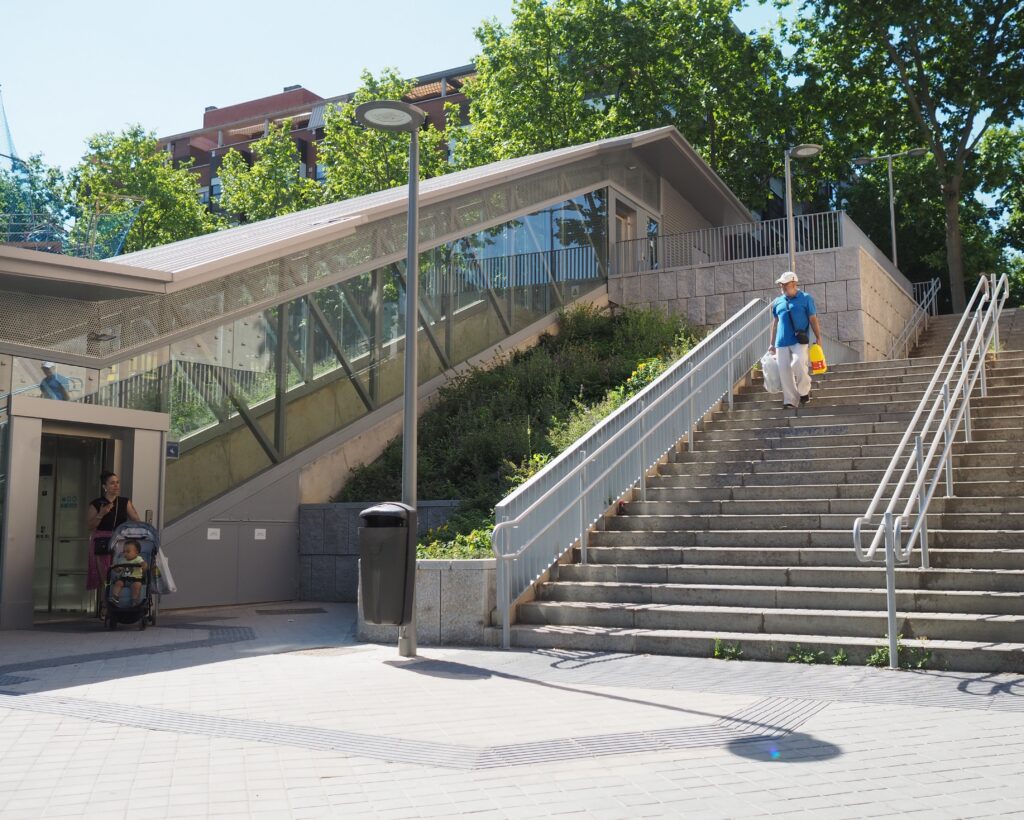
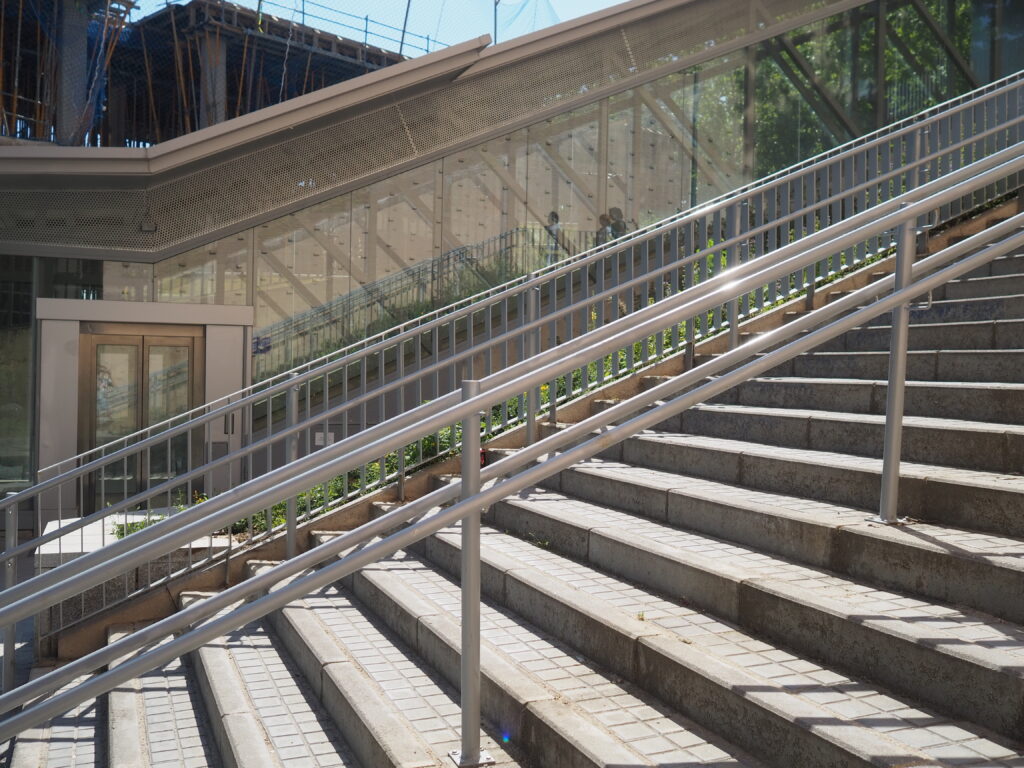
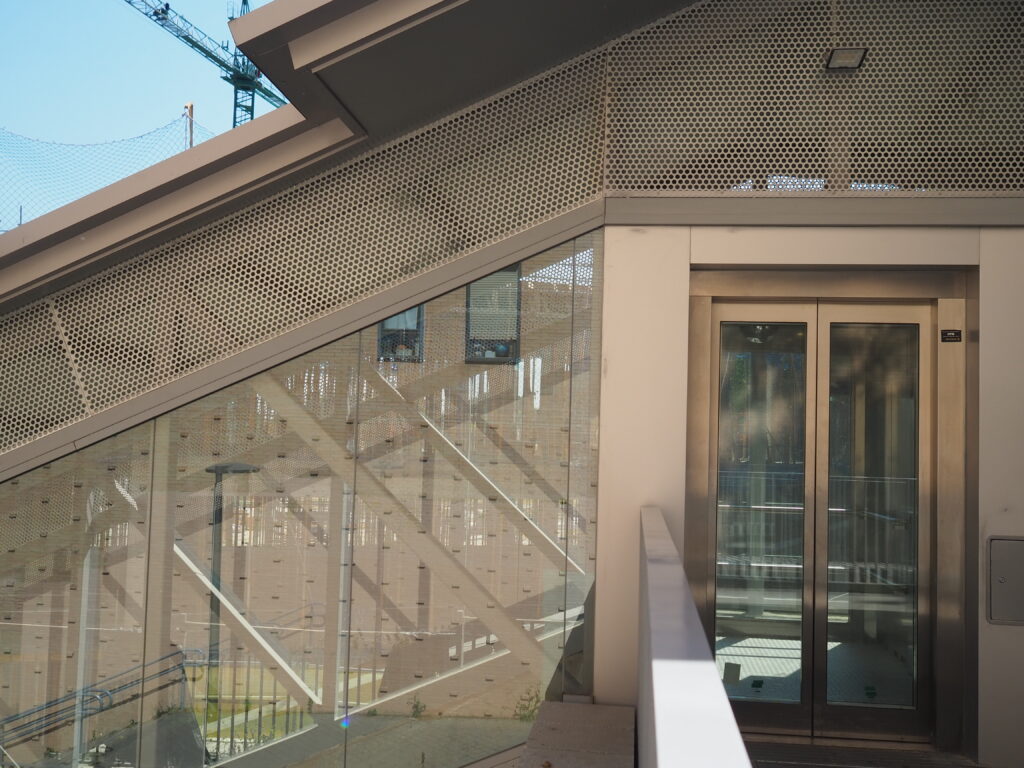
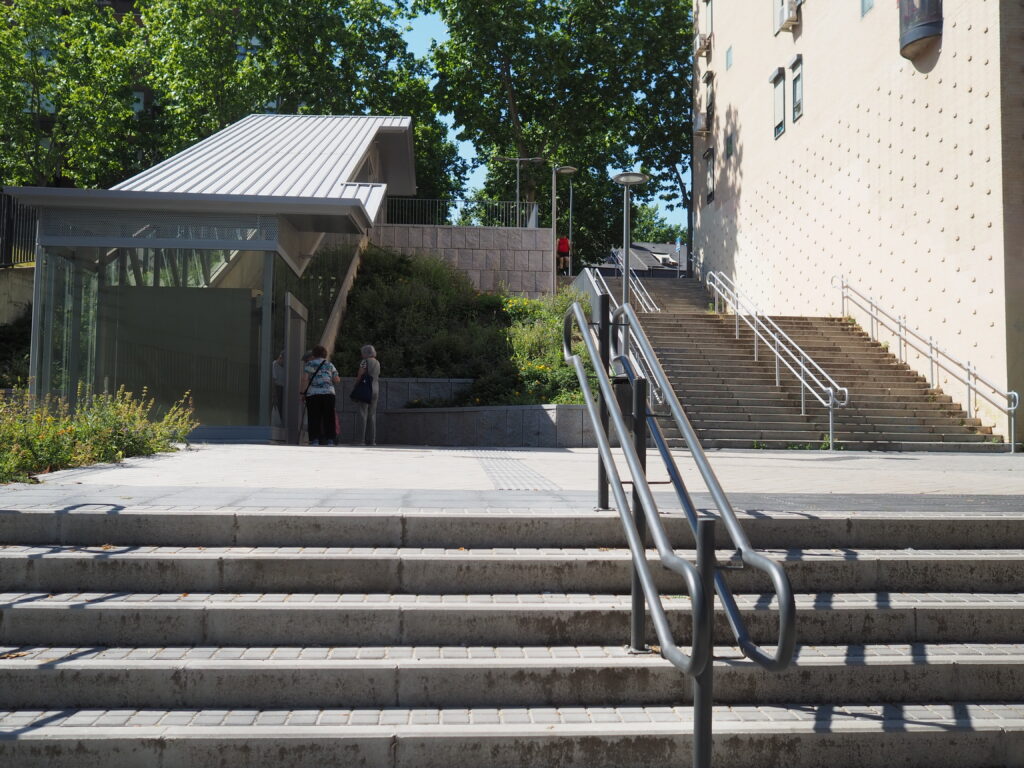
Manuela (do we have a surname here?) thought this should change. As a resident of Los Cármenes, she witnessed elderly people take fifteen to twenty minute detours, just to avoid climbing the almost 80 steps-long staircase from Calle de Sepúlveda to the higer up Calle Monsalupe. During the proposal phase of the 2018 cycle of Madrid’s participatory budget, she proposed that a ‘zigzag’ ramp be built along part of the steps, so that older people, parents with young children and those in wheelchairs, could all reach Monsalupe Street and access the health centre, shops, services and the underground, without having to take the detour.
Madrid, subsequently, thought it could do better than a zigzag ramp and suggested to built a full-blown neighbourhood elevator instead. The idea severely increased the complexity of the implementation of the project, which meant that construction began only in 2024. In March 2026 the final project was delivered and the elevator put into operation.
Project 3: Parcour area under Puente de Pedro Bosch
Not so long ago, the Adelfas neighbourhood, sitting just inside the Avenida de la Paz circular highway demarcating Madrid’s city center, was a relatively abandoned part of town. Somewhat shielded from popular and tourist attention – partly due to the barrio‘s location at the back of the Atocha central train station – reform kicked in later here than in other parts of the center. Going down the Pedro Bosch bridge, a gigantic piece of infastructure arching Atocha’s train tracks, cyclists, pedestrians and car drivers alike are greeted by fresh flower beds before accessing the children-dense streets of Adelfas. Many young families live here despite, until quite recently, not having access to a proper place to play.
Young or expecting parents move to Adelfas because it is child-friendly and tranquilo, much more so than just a kilometer away, at the other side of Atocha station. During the 2000s and 2010s, entire housing blocks sprung up across the barrio without, saw Javier Diez Basurto, much space in the vicinity for the young new residents to roam and play.
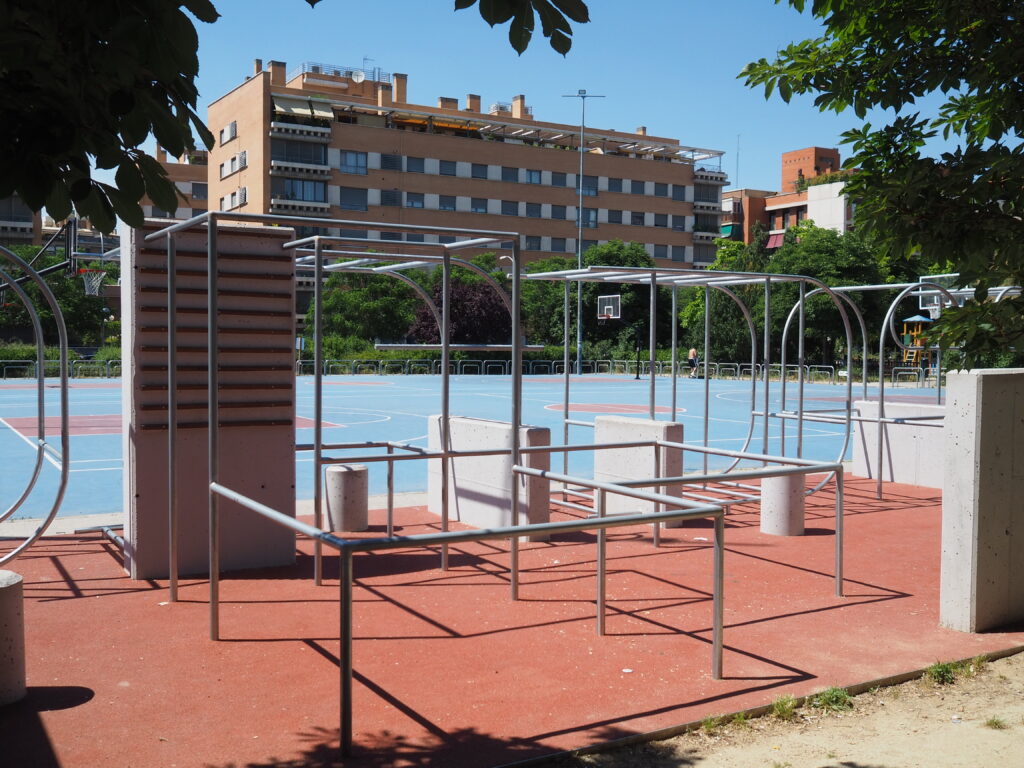
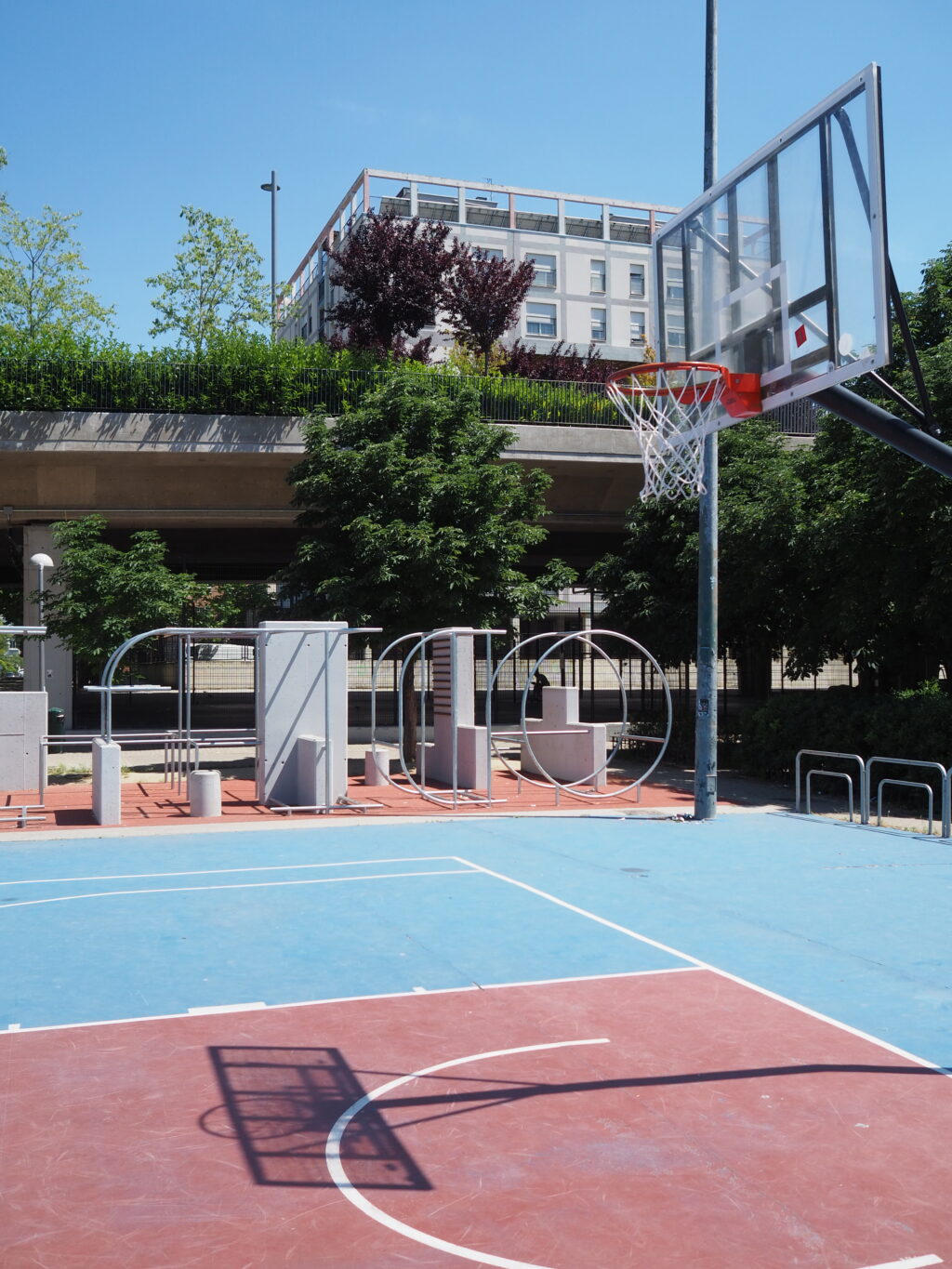
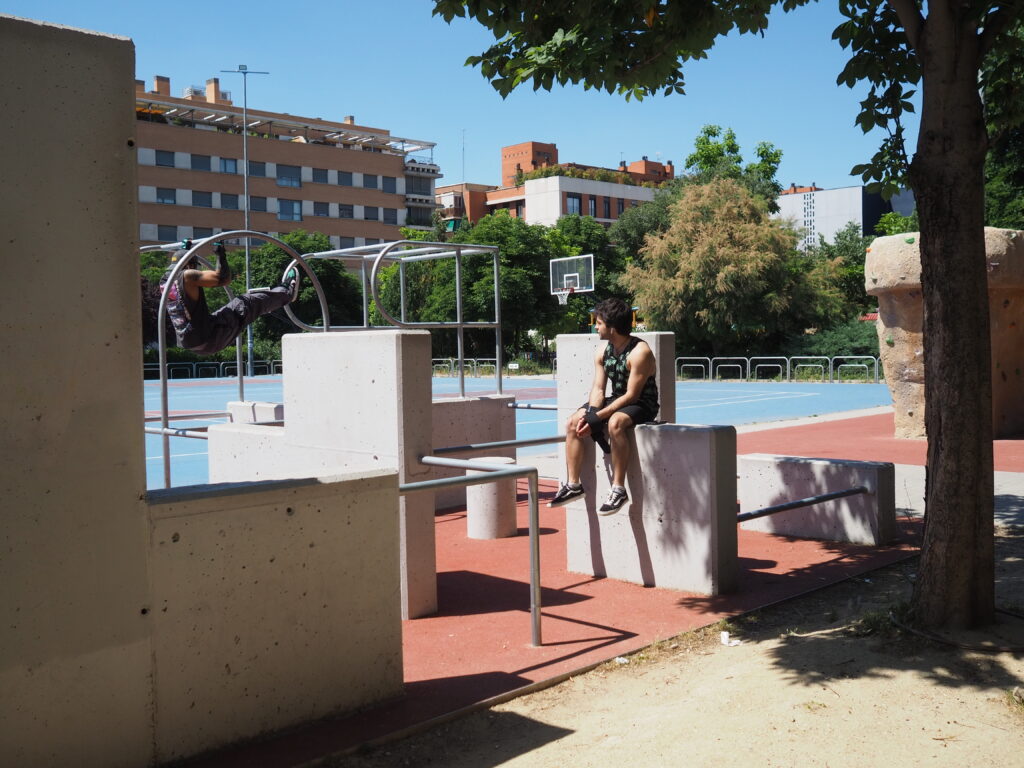
Basurto proposed, in the 2021 participatory budget, exactly that: sports facilities like a basketball court, a roller hockey rinks, a climbing wall or a skatepark. He also saw the ideal spot for it: in the still abandoned field right next to the Pedro Bosch bridge. The proposal was selected by Basurto’s fellow madrileños and eventually implemented and delivered by the municipality in 2024. A basketball court, a parcours area and a calesthetics zone do nowadays adorn the formerly empty fields sitting in the shadows of the imposing structure of Puente de Pedro Bosch.
Less money, more control
Madrid’s participatory budget started in 2015, with a gigantic budget of 100 million euros. A lot has changed since then. The differences between the first four years and the years after boil down to this: less money and more control.
First of all, in 2020, the budget got cut in half by the city’s conservative government in 2020. Less money. Second, the process changed. One change was that from repeating annually, the participatory budget is now happening biannually in order to give the administration more time to carefully evaluate and execute selected projects. More control.
Also the process changed. Before 2020, the presupuesto participativo on the Decide Madrid platform didn’t have a so-called ‘support’ phase. Now it does. Why? Because evaluation is time-consuming and evaluating 1700 projects in a few months is just not viable.
Managing expectations
Madrid’s participatory budget pre-2020 sometimes frustrated madrileños because some of the projects that they selected by public vote, ultimately turned out not be feasible for implementation. Projects would be too costly, out of municipal jurisdiction, or would interfere with local regulations. For this reason, a preliminary feasibility assessment was introduced. This check is crucial for Madrid, as it allows the city to separate out non-feasible project ideas in terms of jurisdictions, regulations or budgets.
The introduction of the support phase together with a strong enough preliminary project evaluation aims to ensure that projects reaching the final vote have a realistic chance of being implemented.
Think about it like a simple pre-selection, before actual selection takes place in the final budget vote. 1700 projects are reduced to 500 projects after receiving enough supports, and then to 350 projects after passing the feasibility check. This type of pre-selection helps the ayuntamiento separate the wheat from the chaff, and save a lot of time and frustration in the process.
Between collective needs and self-interest
A basic requirement of projects that are proposed on the Decide Madrid platform, is that they improve the city, not just the life of the proposer. However, a degree of self-interest is good, they believe in Madrid, perhaps even essential to effective participation. Yes, democracy is about the bigger picture of collective needs rather than individual needs. But if participatory processes fail to promise, and then deliver, concrete value for those who participate, these will be condemned to a short life.
In Madrid, some projects, like a basketball or a rollerblade court, are examples of ‘self-interested’ projects, with parents of young children proposing these courts to be built in their neighbourhoods, sometimes even their own streets. Others, like parks, bridges or improvements to infrastructure for elderly or people with disabilities, stand further on the common good end of the spectrum.
A potential conflict exists between more ‘self-interested’ projects and the common good of a neighbourhood or a city. On the CONSUL DEMOCRACY platform, however, this conflict is flattened out, mainly because of its dominant voting method: approval voting; residents can only approve a project, not disapprove it. In Madrid the platform got customized by introducing the no-vote, which bears a cap on the number of no-votes per user to make sure proposal submitters don’t go and disapprove all other competing projects.
————————————-
This article was created on the basis of an interview with Luis Rodriguez Vega and Javier Monzon Piñeiro of the Participation Department of the Ayuntamiento de Madrid. The text and photos are published under the CC BY-NC license.